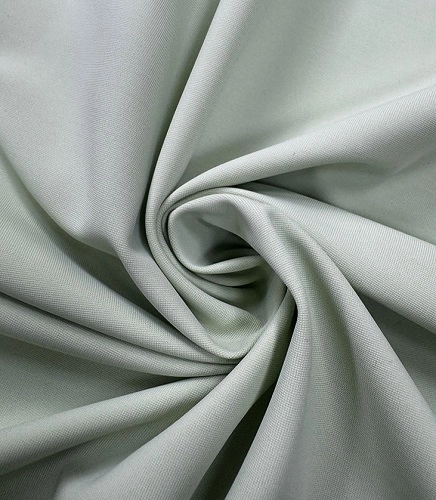
Polyester double warp fabric is a specialized textile that has gained significant attention in industrial, commercial, and fashion sectors due to its unique structural characteristics, durability, and versatility.
Introduction to Polyester Fiber
Polyester is a synthetic polymer fiber derived primarily from polyethylene terephthalate (PET). It is recognized for its high tensile strength, resistance to stretching and shrinking, low moisture absorption, and excellent chemical resistance. Polyester fibers are inherently hydrophobic, which allows them to maintain dimensional stability in humid conditions and resist mildew and fungal growth.
When used in textile manufacturing, polyester can be engineered into various yarn types, including filament and staple fibers. These fibers serve as the foundation for different weave patterns, including plain, twill, satin, and complex double warp constructions.
Understanding Double Warp Weaving
Definition
Double warp weaving is a fabric construction technique in which two sets of warp yarns run longitudinally through the fabric and are interlaced with weft yarns in a coordinated manner. Unlike conventional single-warp weaving, double warp fabric provides a denser structure, improved dimensional stability, and enhanced mechanical properties.
Structural Characteristics
Key structural characteristics of double warp fabrics include:
- Increased warp density: Two warp systems allow for higher thread count per unit length, improving tensile strength along the fabric's longitudinal axis.
- Balanced stability: By carefully aligning the two warp sets, manufacturers achieve uniform distribution of tension, reducing fabric distortion and wrinkling.
- Enhanced patterning capabilities: Double warp weaving enables complex surface designs, including jacquard and dobby patterns, without compromising fabric integrity.
- Thickness and hand feel: The interlacement of two warp layers can produce a thicker, more substantial fabric with a firm yet flexible hand.
Weaving Techniques
Double warp fabrics can be produced using various weaving methods:
- Plain double warp weave: Both warp sets are interlaced with weft yarns in a simple over-under pattern, producing a uniform, balanced fabric.
- Twill double warp weave: A diagonal pattern is formed by offsetting the interlacement sequence, enhancing drape and aesthetic appeal.
- Jacquard double warp weave: Enables complex patterns by individually controlling each warp yarn set, often used for decorative fabrics.
Technical Properties of Polyester Double Warp Fabric
Polyester double warp fabrics inherit many of polyester’s inherent advantages while gaining additional performance features from the double warp structure.
Mechanical Properties
- Tensile strength: The dual warp construction significantly increases the fabric's longitudinal strength, making it suitable for high-stress applications such as industrial tarpaulins, conveyor belts, and upholstery.
- Tear resistance: The interlacing of two warp systems distributes stress more evenly, improving tear and puncture resistance.
- Dimensional stability: Minimal shrinkage and excellent stability under tension make it ideal for precision applications, including technical clothing and upholstery.
Physical and Chemical Properties
- Moisture management: Low moisture absorption ensures quick drying and resistance to water-induced deformation.
- Chemical resistance: Resistant to most acids, alkalis, and solvents, making it suitable for laboratory and industrial applications.
- UV resistance: With appropriate finishing, polyester double warp fabric can withstand prolonged exposure to sunlight without significant degradation.
- Thermal behavior: Polyester has a melting point around 250°C. The fabric maintains structural integrity under moderate heat but may shrink or deform at higher temperatures.
Aesthetic and Functional Qualities
- Surface texture: Can range from smooth and glossy to matte or textured, depending on the yarn type and weaving method.
- Color retention: Polyester dyes well and retains vibrant colors over time due to the fiber’s low porosity.
- Weight and drape: Typically medium to heavy weight, with drape characteristics adjustable through weaving density and finishing processes.
Manufacturing Considerations
Producing polyester double warp fabric requires advanced weaving machinery capable of handling dual warp beams and precise tension control.
Key considerations include:
- Warp preparation: Proper winding, sizing, and tensioning of warp yarns are critical to prevent breakage during weaving.
- Weaving speed: Double warp looms operate at lower speeds than single warp looms due to the increased complexity of interlacing.
- Finishing processes: Post-weaving treatments such as heat setting, calendaring, and chemical finishing enhance dimensional stability, hand feel, and appearance.
Applications
Polyester double warp fabric is widely used across multiple sectors:
Industrial Applications
- Conveyor belts and industrial linings
- Safety harnesses and load-bearing textiles
- Geotextiles for construction and erosion control
Fashion and Apparel
- Outerwear and performance clothing
- Structured garments requiring enhanced stability
- Designer textiles with complex woven patterns
Home Textiles
- Upholstery for furniture
- Curtains and draperies
- Decorative textiles with jacquard or embossed patterns
Technical and Specialty Textiles
- Tent fabrics and tarpaulins
- Protective covers and bags
- Composite reinforcement in automotive and aerospace industries
6. Advantages and Limitations
Advantages
- High tensile strength and durability
- Excellent dimensional stability and low shrinkage
- Versatility in weaving patterns and textures
- Resistance to moisture, chemicals, and UV exposure
Limitations
- Reduced breathability compared to natural fibers
- Heat sensitivity; potential melting or deformation at high temperatures
- Requires specialized machinery for production, increasing cost
Polyester double warp fabric represents a synthesis of synthetic fiber performance and advanced textile engineering. Its unique structural characteristics, mechanical resilience, and versatile aesthetic potential make it a valuable choice for industrial, commercial, and fashion applications. By carefully selecting yarn types, weaving patterns, and finishing processes, manufacturers can tailor polyester double warp fabrics to meet a wide range of functional and decorative requirements, cementing its position as a technically sophisticated and highly adaptable material in modern textiles.